Clinical medical assistants play an essential role in today's healthcare system. From preparing patients for exams to assisting physicians during procedures, these professionals help keep medical offices running efficiently while delivering compassionate patient care.
According to the U.S. Bureau of Labor Statistics, employment of medical assistants is projected to grow 12% through 2034, with about 112,300 positions opening each year on average. That’s much faster than the average for all occupations! Many of those openings are expected to result from workers retiring. If you're considering a career in healthcare, becoming a clinical medical assistant can provide a fast path into a rewarding, patient-focused profession.
The first step toward getting started in a clinical medical assistant career is to complete a medical assisting training program. During these programs, students learn both clinical and administrative duties so that they’re well equipped for entry-level employment.
What Is a Clinical Medical Assistant?
Clinical medical assistants are medical assistants whose primary duties are clinical in nature. These specialists are capable of performing administrative tasks, but clinical medical assistant duties focus on direct patient care. They support nurses, physicians, and other medical staff with daily clinical procedures.
Clinical medical assistants commonly work in hospitals, physicians’ offices, clinics, urgent care centers, and assisted living facilities. In these work environments, the medical assistant role embodies a range of administrative and clinical duties to support the provision of quality care and keep the facility running smoothly. Due to their varied skill set, they’re vital members of medical teams.
What Does a Clinical Medical Assistant Do?
Clinical medical assistants share many of the same tasks as traditional medical assistants, including recording patients’ vital signs (such as blood pressure and weight), updating patients’ medical records, and scheduling patients’ appointments. However, these workers should be equipped to handle more detailed clinical medical assistant duties, such as:
- Performing basic diagnostic tests, such as electrocardiograms (EKGs)
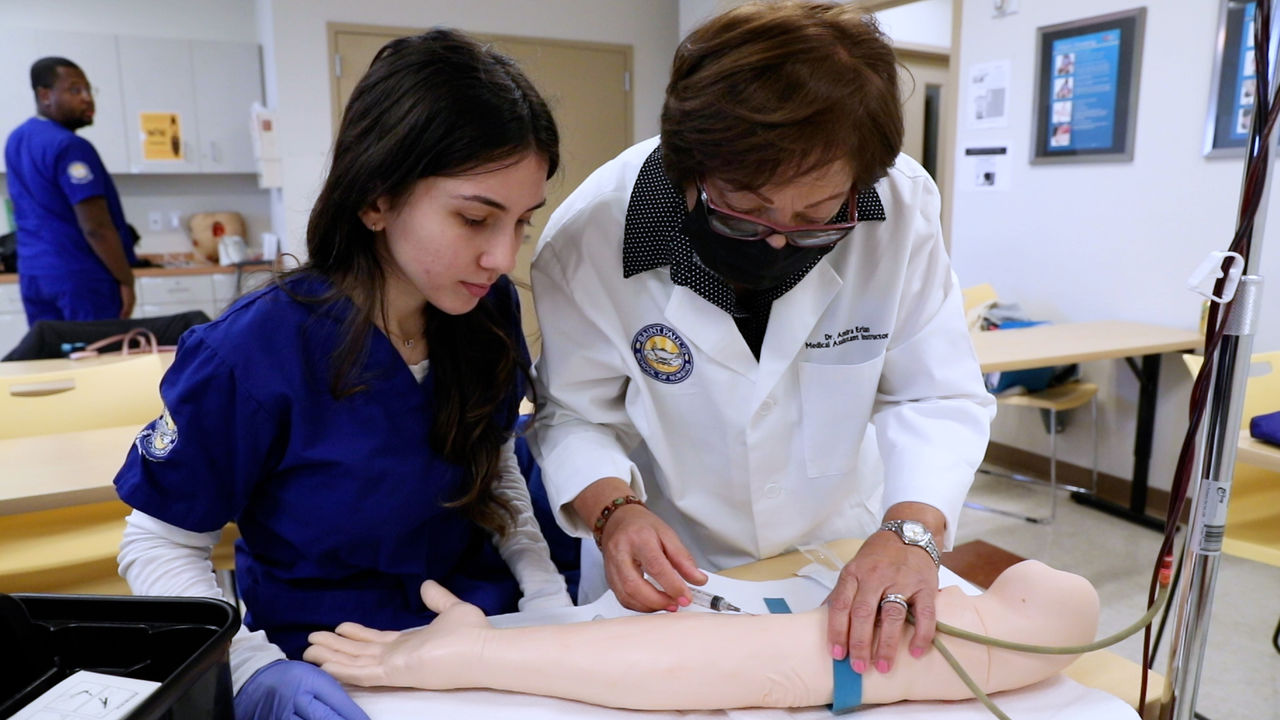
- Drawing patients’ blood and transporting patients’ specimens for laboratory analysis
- Sterilizing medical tools for examinations
- Cleaning and restocking examination rooms
- Assisting nurses and physicians with patient examinations
- Administering injections, vaccinations, and medications according to a physician’s or nurse’s medical order
- Cleaning patients’ wounds and changing wound dressings
- Explaining medical treatments to patients and their loved ones
- Maintaining medication inventory and medical supplies
- Educating patients on medical conditions and preventive care tactics
Actual job duties may vary by employer, but clinical medical assistants should be confident in their ability to carry out duties within their scope of training.
What Skills Does a Clinical Medical Assistant Need?
Clinical medical assistants need certain key skills to be effective healthcare workers. They have unique abilities that serve individuals and medical facility operations, so some qualities stand out in this role. Some common skills may include the following:
- Interpersonal relations: Whether they’re greeting patients, reviewing patients’ medical histories, or assisting doctors with simple medical procedures, clinical medical assistants need to be courteous, friendly, and adaptable to various patient types and colleagues.
- Communication: When explaining procedures, medications, or treatment plans, clinical medical assistants must have strong oral and written communication skills to clearly relay the information. In addition, active listening skills are crucial when following the orders of nurses and doctors.
- Organization: Clinical medical assistants manage multiple tasks in fast-paced environments, so they must have strong organizational skills to maintain efficiency.
- Teamwork: Clinical medical assistants are members of a team, so they should be able to work well with others professionally when coordinating patient care.
- Detail orientation: Medical assistants handle several tasks that require precision, including administering the correct medication dosage, recording patients’ vital signs, and labeling patient samples for laboratory testing.
Learn Key Clinical Medical Assistant Duties With an Associate Degree
Performing clinical medical assistant duties requires a blend of administrative and clinical expertise. Clinical medical assistants must deliver high-quality care with a strong sense of professionalism, prioritizing patient well-being and supporting medical staff.
At Saint Paul’s School of Nursing, prospective medical assistants are trained for entry-level employment in both clinical and administrative roles. In as little as 18 months, individuals can earn an Associate of Occupational Studies in Medical Assisting. The medical assisting program is offered at both the Staten Island and the Queens campuses, in New York.
The program spans 72 instructional weeks and addresses topics such as patient care, medical computer applications, medical office administration, clinical procedures, and healthcare facility operations. Instruction also covers emerging medical technologies, medical ethics, effective communication, and techniques to handle medical emergencies.
Want to learn more and start the admissions process? Find out how Saint Paul’s School of Nursing can launch your clinical medical assistant career.
Recommended Readings
Diversity in Medical Assisting
How to Make the Leap from Medical Assistant to an Alternative Medical Career
The Career Path from CNA to RN: Roles & Responsibilities